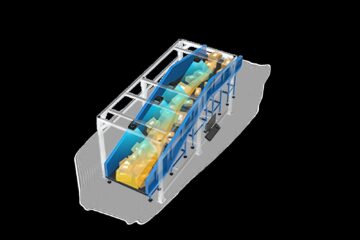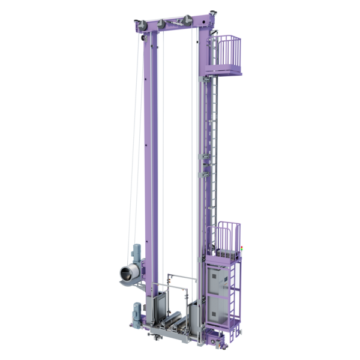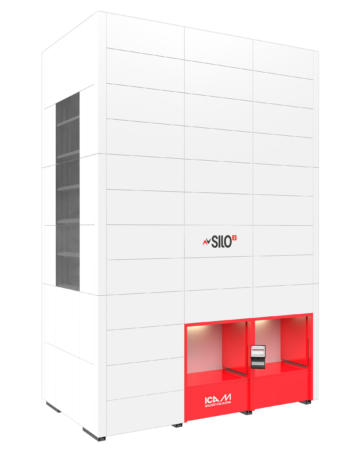
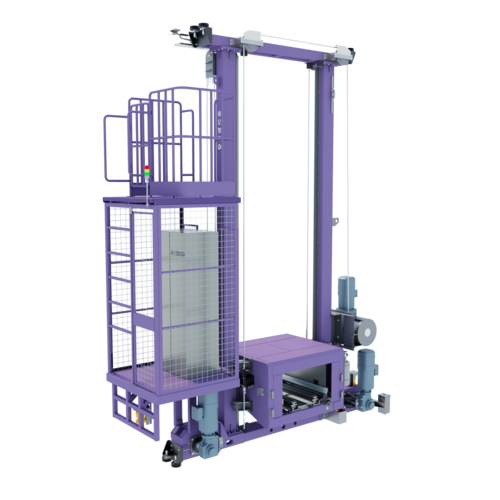
The new energy stacker crane is a lifting and transportation equipment designed to meet the automated warehousing requirements of the new energy lithium battery, semiconductor and other industries.
The New Energy stacker crane refers to a specialized variant of automated storage and retrieval system (AS/RS) stacker cranes tailored for the rapidly growing new energy sector, particularly lithium-ion battery manufacturing, photovoltaic (PV) modules, energy storage systems, and related components. These cranes incorporate enhanced safety, anti-static, and environmental controls to safely handle sensitive, high-value, and sometimes hazardous materials like battery cells, electrode rolls, separators, or finished modules while maintaining high throughput in dedicated production-to-warehouse integrated facilities.
- Industry-specific safety enhancements: ESD/anti-static systems, grounding mechanisms, and optional fire-suppression interfaces to safely store and handle lithium batteries, electrode materials, and energy storage components without risk of electrostatic discharge or thermal events.
- Specialized load handling: Custom grippers, forks, or fixtures designed for battery pallets, film rolls, modules, or irregular shapes, supporting loads from 500–3000+ kg with precise centering and gentle handling to prevent damage to sensitive cells.
- High-bay optimization for gigafactories: Achieves horizontal speeds of 3–5 m/s and vertical speeds of 1–2 m/s, supporting 100–300 cycles per hour per crane to meet fast-paced order fulfillment demands.
- Flexible load devices: Equipped with customizable extractors (e.g., vacuum, clamp, or finger grippers) for handling diverse container shapes and materials, including ESD-safe options for electronics.
- Energy-efficient design: Incorporates regenerative braking and low-friction rails to minimize power usage, often reducing consumption by 20–40% compared to heavier stacker cranes.